
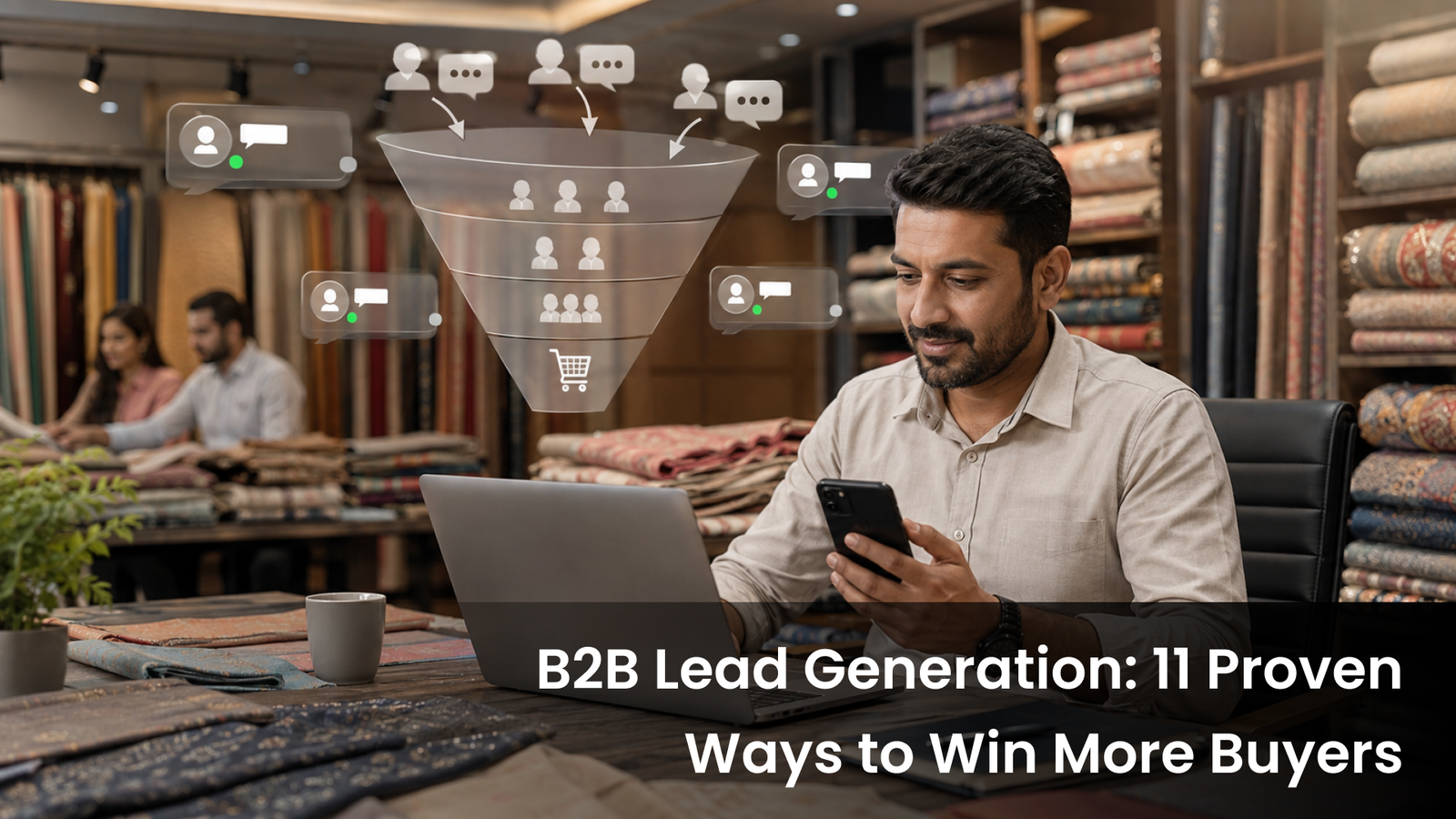
B2B lead generation is one of the most important parts of growing a wholesale business. A great product collection doesn’t automatically create sales. Wholesalers and manufacturers need a consistent way to put their products in front of retailers, resellers and other businesses that are actually interested in buying.
For Indian wholesalers, B2B lead generation is increasingly becoming a multi-channel process. Current 2026 discussions around Indian B2B sales highlight WhatsApp, intent-based acquisition and multiple digital touchpoints as important parts of modern lead generation.
Here are 11 practical ways to build a stronger pipeline.
1. Define Your Ideal Buyer
Before starting B2B lead generation, decide exactly who you want to attract.
For a textile wholesaler, this could be:
- Saree retailers
- Boutiques
- Fashion stores
- Online sellers
- Regional distributors
- Resellers
Don’t simply say: “I want more customers.”
Define: “I want retailers who regularly purchase women’s ethnic wear in bulk.”
That makes every marketing decision easier.
2. Build a Searchable Online Presence
Google can become an important source of B2B lead generation when buyers are actively searching for suppliers.
Create a professional website with pages covering:
- Products
- Business categories
- Location
- Wholesale information
- Contact details
- Minimum order information
- Markets served
For local businesses, Google Business Profile allows businesses to appear on Google Search and Maps, share updates, display products and collect reviews.
3. Create Content Around Buyer Searches
Content marketing can support long-term B2B lead generation.
Instead of publishing only company news, answer questions buyers search for.
Examples:
- Best wholesale textile markets in India
- How to find textile suppliers
- Wholesale fabric buying guide
- How to choose a garment manufacturer
- Wholesale pricing strategies
A useful article can attract a buyer before they know your company.
4. Use WhatsApp for Lead Conversion
Someone discovers your business on Google or Instagram.
What happens next?
Give them an easy way to start a conversation.
WhatsApp can help turn interest into an actual enquiry.
This is why B2B lead generation shouldn’t stop at traffic.
The journey should be:
Discovery → Interest → Conversation → Qualification → Order
5. Build a Professional Digital Catalogue
A buyer needs to see what you sell.
Instead of sending dozens of separate photographs, create an organized catalogue.
CatalogDost is designed around this specific problem: helping jewellery and textile sellers organize collections into a shareable digital catalogue and receive buyer enquiries.
A digital catalogue can make your B2B lead generation process more organized because prospects have somewhere clear to browse your collection.
6. Use Instagram for Product Discovery
Instagram is useful for showing products visually.
For wholesale businesses, content can include:
- New collections
- Product videos
- Fabric close-ups
- Styling ideas
- Behind-the-scenes content
- New arrivals
- Customer stores
- Packing videos
But don’t rely only on follower growth.
The objective of B2B lead generation is to turn attention into qualified enquiries.
Include a clear call to action.
7. Use Referrals
One of the simplest sources of B2B lead generation is your existing customer base.
Ask satisfied customers: “Do you know another retailer who may be interested in this collection?”
You can also create a structured referral program where appropriate.
Existing buyers already understand your product quality and service, which makes their recommendations valuable.
8. Reconnect With Old Customers
You don’t always need new leads.
Look at your existing database.
Find customers who:
- Haven’t ordered recently
- Used to purchase regularly
- Asked for prices but never ordered
- Viewed collections but disappeared
Then contact them with something genuinely relevant.
This combines B2B lead generation with customer reactivation.
9. Use Paid Advertising With a Clear Offer
Google Ads and Meta advertising can generate leads when the offer and targeting are clear.
Google itself recommends mapping the customer journey from initial contact through to sale rather than thinking only about generating a form submission.
Don’t advertise: “We are the best wholesaler.”
Instead try something more specific: “New wholesale cotton collection — enquire for bulk pricing.”
A specific offer gives the buyer a reason to respond.
10. Qualify Leads
Not every enquiry is a good lead.
Ask questions such as:
- What products are you looking for?
- Where is your business located?
- What quantity do you normally purchase?
- Are you a retailer, reseller or distributor?
- Which price range are you targeting?
This helps separate casual enquiries from genuine buyers.
Good B2B lead generation isn’t simply about quantity.
It’s about quality.
11. Follow Up Consistently
Many leads don’t buy immediately.
Create a follow-up process.
For example:
Day 1: Send collection
Day 2: Ask whether they found anything relevant
Day 5: Share a related collection
Day 10: Send a new arrival
Later: Reconnect when you have relevant stock
Don’t spam.
Make every follow-up useful.
A Simple B2B Lead Generation System
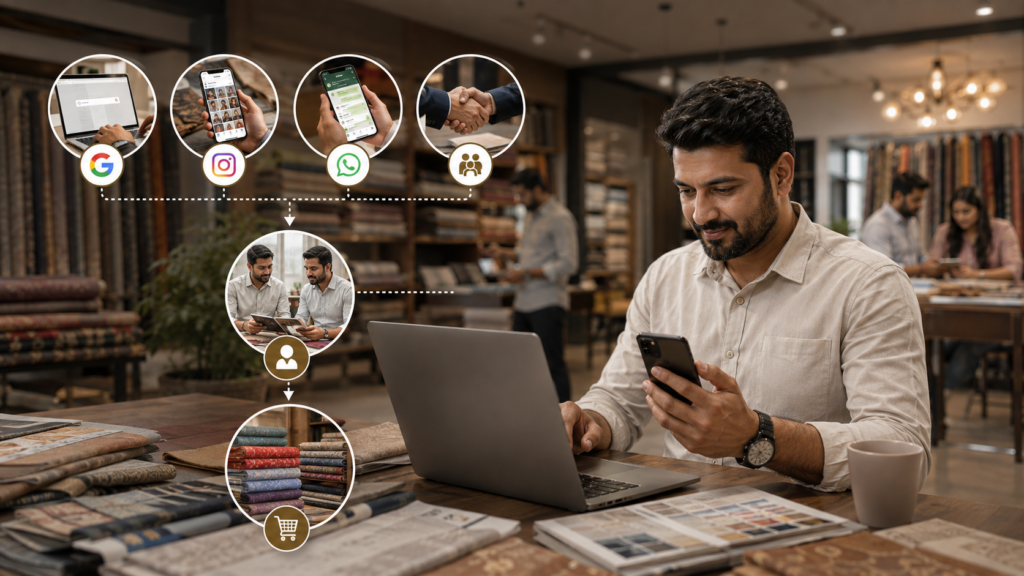
You can build a basic system like this:
Google / Instagram / Facebook
↓
Website or Catalogue
↓
WhatsApp Enquiry
↓
Buyer Qualification
↓
Quotation
↓
Follow-Up
↓
Order
↓
Repeat Customer
This is much more sustainable than relying on one sales representative to manually search for buyers every day.
Final Thoughts
Successful B2B lead generation doesn’t depend on one magical marketing channel.
It comes from building a system where buyers can discover your business, understand what you sell, view your collection, contact you easily and receive timely follow-up.
For wholesalers, that system can combine Google, social media, WhatsApp, referrals, content marketing and digital catalogues.
The important thing is consistency.
Read Relatable Content : Explore Now